
DIAGNOSTICS // 2026-08-28
Why Simply Deleting Fault Codes Doesn't Fix Your Vehicle
The warning light is off... for now. Here's why clearing a fault code without diagnosing the cause means the problem always comes back — and what proper fault finding looks like instead.

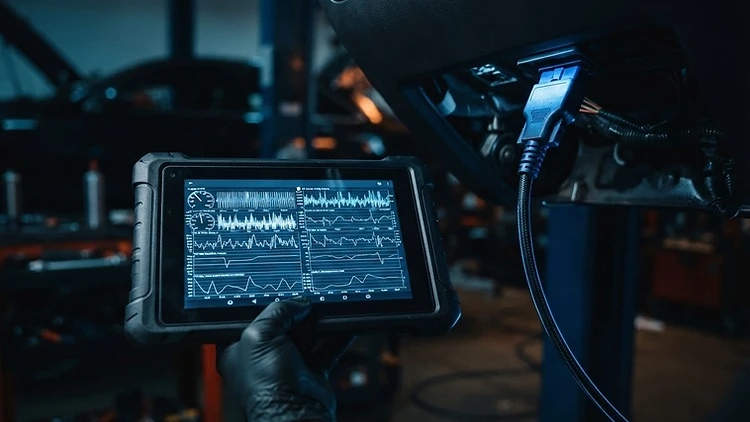
It's one of the most common stories we hear: a warning light came on, someone plugged in a scanner, the codes were cleared, and the light came back a week later. Here's why — and what the fix actually involves.
A fault code is a symptom, not a diagnosis
When a control module stores a fault code, it's telling you that something about that system went outside its expected limits. It is not telling you which part is broken.
A simple example: an engine misfire code can be caused by a failing ignition coil, an injector, low compression, a sensor — or a wiring fault feeding any of them. The code narrows down where to look, never what to replace.
Why the light always comes back
Deleting a fault code erases the memory of the problem — not the problem. If the underlying cause is still there, the module detects it again and re-logs the fault. That's why cleared codes "work" for a few days or weeks on intermittent faults, then return.
Worse: intermittent faults are the hardest to reproduce, so each failed clear-and-reset costs you another waiting game.
What proper fault finding looks like
Proper diagnosis is a process, not a button press:
- Gather evidence — a full scan of every module, plus your description of the symptoms.
- Follow the manufacturer's test plan — the structured procedure written by the people who built the system.
- Test the suspects — live data, oscilloscope and multimeter work that proves what's actually happening electrically.
- Fix the cause, then verify — repair, re-test, and confirm the fault doesn't return.
At JVS this is exactly how our advanced vehicle diagnostics work — using manufacturer-level systems like BMW ISTA and VW Group ODIS.
If you've got a warning light that keeps coming back, contact JVS and describe what the vehicle does — we'll find out why.