
BMW CODING & RETROFITS // 2026-10-27 // 3 min read
BMW Parking Sensor Retrofits: What's Involved
How BMW parking sensor retrofits work — correct parts for the vehicle, proper installation, and the coding that makes the system behave like a factory option.
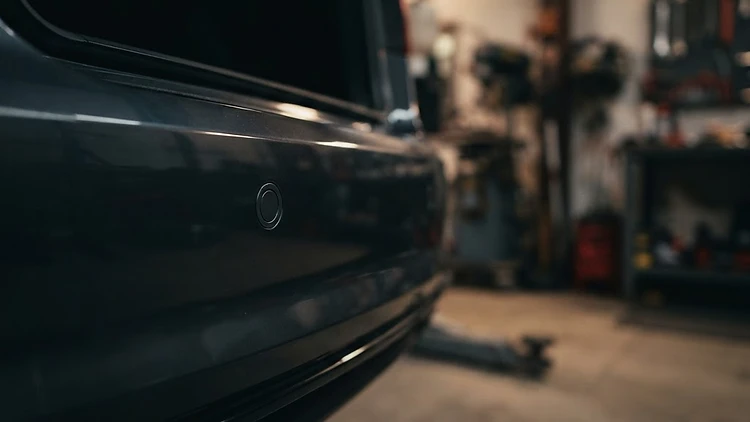
Parking sensors are one of those features you don't miss until you've had them — and retrofitting them to a BMW that lacks them is entirely practical. But like every retrofit, it only works properly when the parts match the vehicle and the coding is done correctly. A set of sensors drilled into a bumper without correct integration isn't a retrofit; it's an accessory with a fault light waiting to happen.
What a parking sensor retrofit involves
Optical/acoustic retrofit kits (PDC, Park Distance Control in BMW terminology) involve:
- Sensors fitted into the bumpers, colour-matched to the paintwork so they look factory.
- A control module mounted and wired correctly.
- Wiring routed cleanly through to the vehicle's networks.
- A display element — on BMWs with a screen, the distance display and audible warning integrate through the vehicle's own systems.
Compatibility: what we check first
As with any retrofit, it starts with the actual vehicle:
- The model and bumper construction — which sensor positions and mounting are correct.
- The head unit and display generation — how warnings and distance graphics present.
- The vehicle's existing configuration — whether parking assistance is already partly equipped, and what coding the vehicle will accept.
- The parts list for that specific vehicle — sensors, module, harness, trim.
We confirm all of this from the VIN or registration before quoting. Two cars of the same model can need different parts lists depending on their options — checking beats guessing.
Installation and coding
The installation side matters more than people expect:
- Sensor fitment — holes must be positioned and sized correctly for clean, water-tight mounting and correct detection angles.
- Module wiring — power, ground and network connections made properly, no bared joints or false taps.
- Coding — the vehicle is coded to accept the PDC system: the module registered, the display and warnings enabled, the system integrated so it behaves like a factory option, activating in reverse and integrating with any fitted camera.
- Verification — the system is tested with real objects at real distances, sensor by sensor, and the fault memory is checked clean afterwards.
The coding step is what makes the difference between a system that works properly and one that produces warnings, misreports distances or fights with other modules. Coding after installation is standard on every retrofit we do — see programming and coding.
Sensors, camera or both?
Sensors and a reversing camera answer different questions. Sensors warn you about what you can't yet see; a camera shows you what's in the space. Many owners retrofit both together — it's the complete solution, and combining the work reduces the overall cost. See our guide to reverse camera retrofits.
What retrofit coding is not
A note we make often: coding enables what the hardware supports. If the vehicle's display or module architecture doesn't support a given integration, no amount of coding creates it — the parts list changes instead. That's why the compatibility check comes before the quote, not after the installation. Our wider retrofits and upgrades service covers the full range of what's possible.
Already have sensors playing up?
If your BMW has factory sensors that are beeping falsely, dropping out or showing a PDC warning, that's a diagnosis rather than a retrofit — moisture in a sensor, a failing module or a wiring fault are all cheaper to fix than a new system. Our advanced diagnostics service will find the actual cause.
Experiencing BMW electrical or software problems, or planning a retrofit? Jono's Vehicle Solutions offers professional retrofits and diagnostics from our Telford workshop, covering Shropshire. Contact us with your registration or VIN.